
Blog · Adult Orthodontics
Lingual Braces vs. Clear Aligners: Your Habits Decide, Not Your Teeth
Both are practically invisible. Both can treat most of the same cases. So how do you choose? In my consultations, the answer usually isn't in your X-rays. It's in your daily routine.

November 18, 2026 · 6 min read
The short version
- Lingual braces sit behind your teeth. Clear aligners are removable trays. Both are nearly invisible.
- For most cases, what they can treat is largely the same, including extractions and a protruding mouth.
- The real difference is who does the work: aligners only work while you wear them (20–22 hours a day); lingual braces work 24/7.
- So the deciding factor is usually your habits, not your teeth.

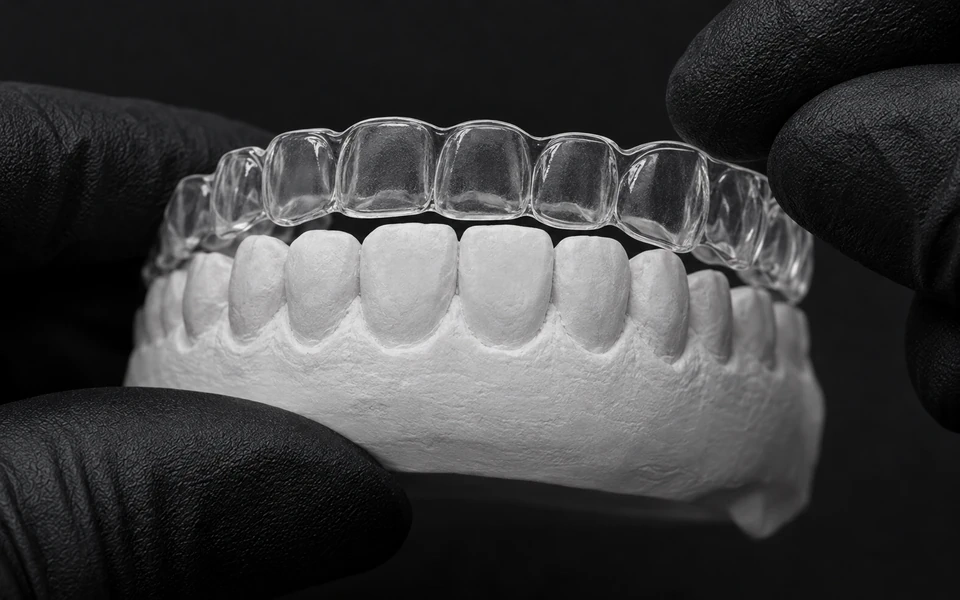
Both are hard to spot. The difference shows up in your day, not your smile.
“I want braces nobody can see.”
When I hear this, the options narrow to two: lingual braces, bonded to the back of your teeth, or clear aligners like Invisalign or Angel Aligner that you take in and out.
The next question is almost always, “Which one is better for my teeth?” Here's the surprise: for most people, the answer isn't in their teeth at all. It's in how they spend their day.
What's the difference between lingual braces and clear aligners?
Who does the work. Clear aligners only move your teeth while they're in your mouth, so you're responsible for wearing them 20 to 22 hours a day. Lingual braces are bonded in place and work around the clock, whether you remember them or not.
Think of two cars headed to the same destination. Clear aligners are a car you drive yourself. You can stop and get out whenever you like, but when you take your hands off the wheel, the car stops too. Lingual braces are a car with a driver. You can't hop out whenever you want, but even when you're asleep, busy or distracted, the car keeps moving.
| Clear aligners | Lingual braces | |
|---|---|---|
| Where they sit | Clear trays over the teeth | Bonded behind the teeth |
| Visible? | Barely | Barely |
| Working hours | Only while worn (20–22 h/day) | 24/7, automatically |
| Eating | Remove, eat, brush, put back | Eat as usual; avoid hard, sticky foods |
| Getting used to it | Snug, tight feeling | Tongue contact, speech adjustment |
| Your main job | Keep up the wear time | Clean carefully around the brackets |
Which is better for my teeth?
For most cases, either one works. Crowded front teeth, a protruding mouth, plans that involve removing premolars: nearly all of these can be treated with lingual braces or clear aligners, and mini-screws can be added to either.
That's why, after looking at your scans, I always ask one more question: “What does a typical day look like for you?” When do you start work? Where do you eat lunch? How many coffees? How often do you eat out? Those answers matter as much as your X-rays.
Your teeth decide the destination. Your habits decide which car gets you there.
Lingual or aligners: which fits my habits?
Count which list sounds more like you.
Lingual braces may suit you if:
- You have coffee or snacks several times a day
- You eat lunch near work, with nowhere convenient to brush
- You often eat out or have work dinners
- You regularly misplace things like glasses or earbuds
- You'd rather have something that just works
Clear aligners may suit you if:
- Sticking to a routine comes easily to you
- You already brush right after meals
- You rarely snack or sip coffee between meals
- You speak a lot for work, and even a few weeks of speech adjustment would be a problem
- You'd like to take your appliance out for special occasions
If the first list sounds more like you, aligners would mean “take out, eat, brush, put back” several times a day. Those small breaks add up, wear time drops, and your teeth simply rest. In that case, handing the wheel to lingual braces is often easier on both your schedule and your results.
What are the advantages of lingual braces?
- No wear-time math: they're always on, so the planned force keeps working all day. No counting hours.
- Nothing to take out: a coffee or a snack doesn't mean removing trays and brushing. Nothing to lose, nothing to forget.
- Truly hidden: they sit behind your teeth, so they stay out of sight when you talk, smile or take photos.
- Travel-friendly: no trays to carry, clean or misplace on business trips.
To be upfront: for the first few weeks, your tongue will notice the brackets, and sounds like “s” may feel slightly off. Most people adjust quickly. You'll also need to clean carefully around the brackets with interdental brushes.
Who are clear aligners best for?
If you want to eat freely and you're confident you can stick to a routine, clear aligners are a great fit. You brush and floss as usual with the trays out. Wondering whether your routine works for aligners? Read Am I a Good Candidate for Invisalign? Comparing brands? See Invisalign vs. Angel Aligner.
What happens at a consultation with a Seoul orthodontist?
You don't need to pick an appliance before you come in. Just think about three things: your daily routine, how much you speak for work, and any big dates coming up, like a wedding or a move.
We take a digital scan and, when needed, a 3D CBCT. Dr. Lee, a board-certified orthodontist, then lays out a lingual plan and an aligner plan side by side, explains how each would change your day, and gives you a written estimate before you decide anything.
We're a one-minute walk from Isu Station (Lines 4 & 7, Exit 2) in Seocho-gu, Seoul, and open until 9 PM on Mondays and Thursdays, plus Saturday mornings.
Frequently asked questions
Can lingual braces and clear aligners treat the same cases?
In most cases, yes. From straightening a few front teeth to extraction cases and a protruding mouth, both can be planned, and mini-screws can be used with either.
Do lingual braces affect speech?
For the first few weeks, your tongue touches the brackets and sounds like “s” can feel a little off. Most people adjust quickly. If you give presentations or take a lot of calls, mention it at your consultation.
Do I really need to wear clear aligners 20+ hours a day?
Yes. Aligners only move teeth while they're in. Outside of meals and brushing, they should stay in, which gets harder if you snack or drink coffee often.
Are lingual braces hard to clean?
Food can collect around the brackets, so you'll need to brush carefully and use interdental brushes. We show you exactly how at the start.
Which one costs more?
It depends on the appliance and the treatment scope. At your consultation, we show you both quotes side by side, based on the same diagnosis.
I travel a lot. Which is easier?
Many frequent travelers prefer lingual braces: there are no trays to carry, clean or lose on the road. If you'd rather have the freedom to remove your appliance, aligners work well as long as you keep up the wear time.
Trained in Seoul and Los Angeles.
Dr. Lee earned her PhD in Orthodontics at Yonsei University, trained at Severance Hospital, and completed an exchange residency at the University of Southern California. Today she peer-reviews research for AJO-DO, the official journal of the American Association of Orthodontists, and teaches Invisalign to doctors at university hospitals. When you come in, she’s the one explaining your plan, in English, from your first scan to your final appointment.
Two invisible options. One that fits your day.
Tell us how you spend your day. Dr. Lee will show you both plans side by side and help you pick the one you'll actually stick with.
Message on WhatsApp Book a VisitWant to compare your options first? See Braces & adult orthodontics and Invisalign & Angel Aligner.
This article is general information and isn't a substitute for an in-person examination. Treatment options, timelines and costs depend on each person's teeth, gums and bite. Orthodontic treatment can involve discomfort, gum irritation or root resorption.
Find us in Seoul
One minute from Isu Station.
Isu Yonsei Baro Orthodontic Clinic
4F, Bangbae Yedain Plaza, 118 Dongjak-daero, Seocho-gu, Seoul.
Isu Station · Lines 4 & 7 · Exit 2