
Blog · Adult Orthodontics
Why Are My Front Teeth Getting Crooked in My 40s? An Orthodontist in Seoul Explains
You scroll past an old photo, zoom in, and something's off. Your lower front teeth didn't used to overlap like that. Here's what's actually going on, and how to tell when it's worth a closer look.

October 30, 2026 · 6 min read
The short version
- Teeth keep shifting slightly throughout adult life, and lower front teeth are often the first place you notice it.
- Age alone doesn't tell you the cause or whether you need treatment. What matters is how it changed, how healthy your gums are, and whether it bothers you.
- Bleeding gums, loose teeth or new gaps mean get your gums checked first, before thinking about braces or aligners.
- Had braces as a kid and stopped wearing your retainer? That's one of the most common reasons teeth drift back.
- Getting checked and starting treatment are two separate decisions. Sometimes the right call is simply to monitor.

Teeth shifting
in your 40s?
Lower front teeth are small and tightly packed, so even a slight shift shows up quickly.
“Wait, were my teeth always like this?”
I hear some version of that question almost every week, usually from patients in their late 30s to 50s. They didn't have braces, or they did and haven't thought about their teeth in twenty years. Then a selfie or an old photo catches their eye, and suddenly they're wondering if it's just aging or something they should deal with.
The honest answer: it can be either. Let's walk through why teeth shift, how to tell which situation you're in, and what to bring if you decide to get it checked.
Yes, adult teeth really do move
It's easy to picture teeth as fixed in place, like nails in a wall. They're not. Each tooth sits in living bone and is held by a thin ligament that responds to pressure and changes over time. Long-term studies that followed adults for decades have found that front tooth crowding tends to increase gradually with age, even in people who never had orthodontic treatment. How much it changes varies a lot from person to person.
The lower front teeth usually show it first. They're the smallest teeth in your mouth, four of them packed into a narrow arch, so a tiny rotation or shift is easy to see.
Your teeth didn't get bigger. Their position, angle and available space changed.
Think of a row of books on a shelf. Tilt one slightly and, from the front, it looks like it's overlapping its neighbor, even though no book got any thicker. That's what crowding looks like in your smile.
You'll hear simple explanations like “your jaw is shrinking” or “your wisdom teeth are pushing everything forward.” Real life is usually messier. Age-related change, past orthodontic treatment and gum health often all play a part.
Which kind of shifting is yours?
The same crowding can tell three very different stories. Here's how they usually break down.
| What you notice | What may be going on | What to check first |
|---|---|---|
| A slow change over several years | Gradual adult tooth movement | How much overlap, hard-to-clean spots, how your bite lines up |
| You had braces, and they're drifting back | Retainer not worn, or a bonded retainer came loose | Retainer history, whether it still fits, any damage |
| A fast change with bleeding or loose teeth | Weakened support from gum disease | Gum inflammation, tooth mobility, bone levels |
Not sure where you fit? Run through this quick self-check tonight while you brush. It's not a diagnosis, just a good way to organize what you'll tell your orthodontist.
- Floss keeps catching or shredding in one crowded spot
- Your hygienist says tartar builds up fast in the same area
- That area bleeds when you brush
- A tooth feels loose, or a new gap has appeared
- You had braces and haven't worn a retainer in a while
- You notice your front teeth every time you see a photo
Bleeding gums or loose teeth? Start there
If crowding shows up alongside bleeding, swelling, loose teeth, discomfort when chewing or new gaps, the first step isn't choosing between braces and aligners. It's checking your gums and the bone that holds your teeth.
When gum disease weakens that support, teeth can shift and your bite can change. Moving teeth through inflamed gums isn't the plan. Getting the gums stable comes first, and orthodontic options come after.
“I had braces as a teenager. Why are they moving again?”
This one comes up constantly. Teeth that were straightened can move again over time, and the most common culprits are simple: the removable retainer ended up in a drawer, or the thin wire bonded behind your front teeth came loose without you noticing.
If you dig out an old retainer and it feels tight or won't seat all the way, don't force it in, and don't try to reshape it with hot water. Your teeth may have moved, the retainer may have warped, or both. It's worth having someone check before you wear it again.
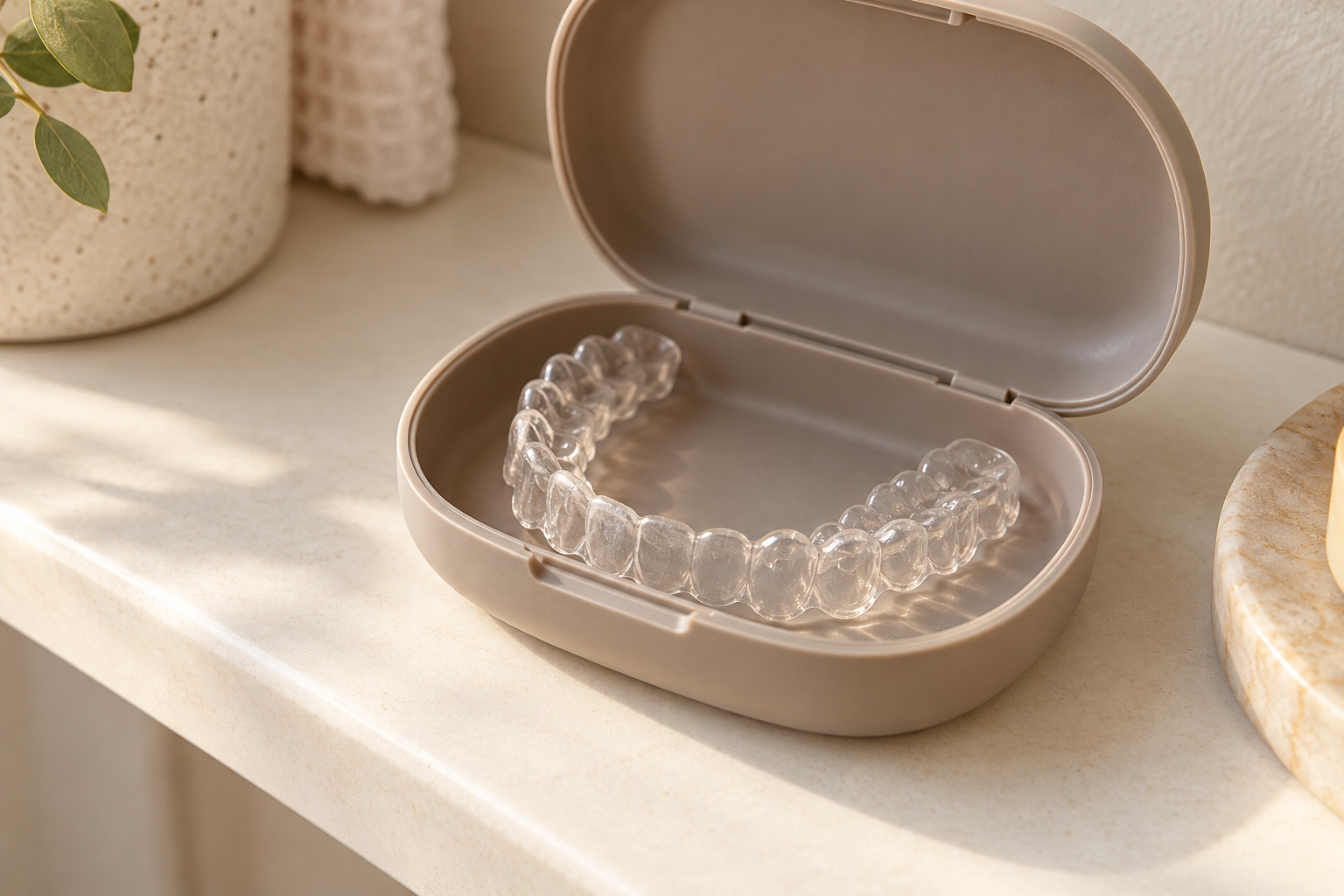
Moved to Seoul and left your retainer back home? Very common, and very fixable. Bring any records you have, even photos of your teeth from before, and we'll work from there.
So, do you actually need braces or aligners?
Here's the rule of thumb I share with patients: the deciding factor isn't your age. It's whether something bothers you, and whether your mouth is healthy enough to move teeth.
It may be worth exploring treatment if:
- The crowded spot is hard to keep clean
- Your bite feels off or uncomfortable
- The way your front teeth look keeps bothering you
On the other hand, if the change is small, your gums and bite look good, and it doesn't really bother you, it's completely reasonable to take photos, keep records and simply monitor for now.
Getting checked and starting treatment are two separate decisions.
“Can you just fix the front teeth?”
Sometimes, yes. Limited treatment can work when only a few teeth need to move. But even when the crowding is only in the front, your orthodontist has to plan where those teeth will go and how your upper and lower teeth meet. Some cases need the whole arch involved. That's why it's hard to promise “just the front” from a photo. For mild crowding, clear aligners are often on the table, and you can learn more on our Invisalign page.
What to bring to your consultation
You don't need to prepare much. A few things on your phone help more than you'd think:
- An older photo where your front teeth are clearly visible (a smiling front shot is perfect)
- Roughly when you first noticed the change
- Any bleeding, loose teeth or chewing discomfort
- Past orthodontic treatment and retainer history
- Medications you take, plus any missing teeth, crowns or bridges
Photos are great clues, but angles and expressions change how teeth look, so we don't judge progression from pictures alone.
At your visit, we look at two questions together: can these teeth be straightened, and is your mouth healthy enough to move them? That means checking alignment, your bite, your gums and the supporting bone, with digital scans and X-rays when needed. Dr. Lee walks you through what she finds in plain English, along with your options, a realistic timeline and a written estimate before you decide anything.
Quick tip: how to brush crowded teeth
Whatever you decide about treatment, you can start this tonight. Crowded spots trap plaque because bristles can't reach between overlapping teeth. Turn your toothbrush vertically and clean each tooth one at a time, then finish with floss or a small interdental brush. It takes an extra minute and makes a real difference.
Frequently asked questions
Is it too late to straighten my teeth in my 40s?
Age alone doesn't rule you out. Healthy teeth and gums, your treatment history and your goals matter far more. Plenty of adults start orthodontic treatment in their 40s and beyond when the conditions are right.
Is it normal for lower front teeth to get crooked with age?
Gradual shifting of the lower front teeth is common in adulthood. But if the change is fast, or comes with bleeding gums or loose teeth, have your gums checked first.
Will a dental cleaning straighten crowded teeth?
No. A cleaning removes tartar and helps control gum inflammation, but it doesn't change how your teeth are aligned. If you do have gum problems, though, getting them under control is an important step before any orthodontic treatment.
Can I straighten just a few front teeth?
Sometimes. Limited treatment works in some cases, but it depends on available space and how your upper and lower teeth meet. Your orthodontist can tell you after an exam.
If I redo orthodontic treatment, will I still need a retainer?
Yes. Teeth can keep shifting after any orthodontic treatment, so a plan for keeping them in place is part of the plan from day one.
Can I start treatment if I might leave Korea before it's finished?
Yes. Let us know how long you expect to stay. We'll plan around your timeline and, if you move, prepare your full records in English so an orthodontist abroad can continue your care.
Trained in Seoul and Los Angeles.
Dr. Lee earned her PhD in Orthodontics at Yonsei University, trained at Severance Hospital, and completed an exchange residency at the University of Southern California. Today she peer-reviews research for AJO-DO, the official journal of the American Association of Orthodontists, and teaches Invisalign to doctors at university hospitals. When you come in, she’s the one explaining your plan, in English, from your first scan to your last appointment.
Noticed your teeth shifting?
Send us a recent photo and a quick note about what's changed. Dr. Lee will see you herself.
Message on WhatsApp Book a VisitWant to see how we approach adult cases? Take a look at Braces & adult orthodontics, or read Invisalign With a Full-Time Job in Seoul.
This article is general information and isn't a substitute for an in-person examination. Treatment options, length and results depend on each person's teeth, gums and bite. Orthodontic treatment can involve discomfort, root resorption or gum recession, so gum health and the range of tooth movement are always considered together.
Find us in Seoul
One minute from Isu Station.
Isu Yonsei Baro Orthodontic Clinic
4F, Bangbae Yedain Plaza, 118 Dongjak-daero, Seocho-gu, Seoul.
Isu Station · Lines 4 & 7 · Exit 2